


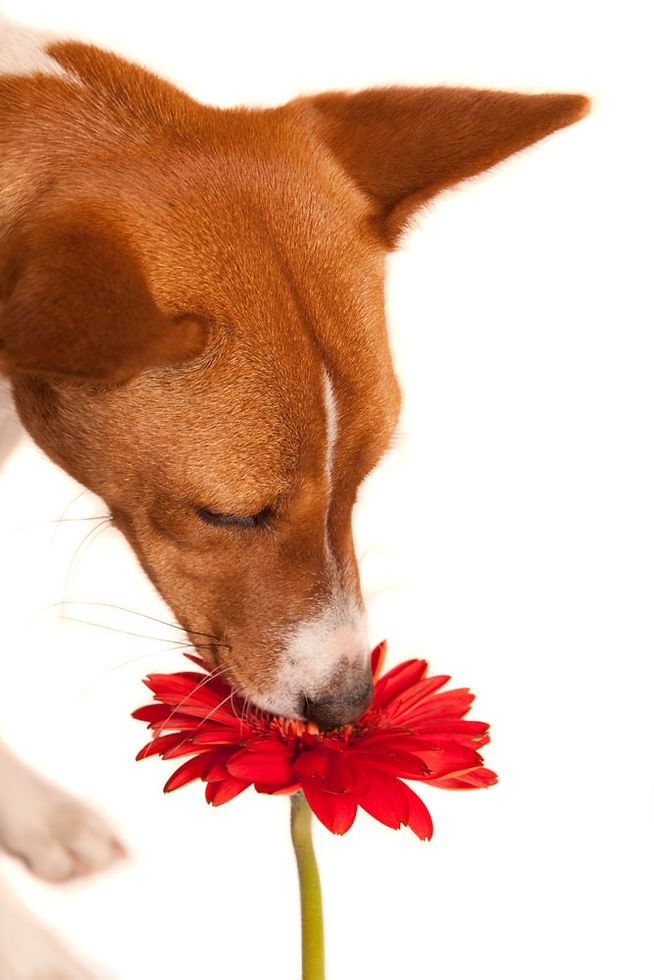
The Smell Chronicles: Why Dogs Love to Sniff (and Why That Matters)
Updated: Sep 25, 2025
If you’ve ever walked a dog, you already know one universal truth: dogs sniff EVERYTHING. Lamp posts, blades of grass, and that mysterious spot on the sidewalk that looks… suspiciously unremarkable to us but is apparently a five-star news headline in the canine world.
At Barks and Parks, we like to think of sniffing as your dog’s version of social media. While we scroll through Instagram, they scroll… well, fire hydrants.
And no one embodies this better than our client Molly.

Meet Molly: The Blonde Bombshell of Jack Darling Dog Park
Molly is a tall, beautiful blonde with long legs and a smile that could melt butter. She’s got an affectionate streak; her kisses are legendary, but she’s also a professional sniffer.
When we take Molly to Jack Darling Dog Park, she greets her dog pals with love… and then immediately sticks her nose right where only a dog could get away with. To Molly, every butt sniff is just saying:
“Hey friend, what have you been up to? Any new snacks at home? Did you roll in anything fun lately?”
Of course, while Molly is busy handing out kisses, her buddy Hunter is already tearing across the park, laser-focused on the next tennis ball. He’s a firecracker with one mission: win every ball, no matter who else has their eye on it.
Her human friends may blush at the sniffing, and they may laugh at Hunter’s ball obsession, but to dogs, this is simply park life at its finest.
Why Do Dogs Sniff So Much?
Here’s the science behind it:
Superpower Noses
Dogs have up to 300 million scent receptors in their noses (we only have about 6 million). That’s like comparing a flip phone to the latest iPhone Pro Max.
Brain Power
The part of a dog’s brain devoted to smell is about 40 times larger than ours, proportionally. Sniffing isn’t just an activity; it’s their full-time job.
Scent as Stories
Every patch of grass is basically a diary entry. Dogs can smell who’s been there, what they ate, whether they’re male or female, and even how they were feeling.
Sniffing = Mental Exercise
A good sniff session can tire a dog out just as much as a long jog. That’s why we let our pups explore with their noses; it keeps them happy, relaxed, and mentally sharp.
Sniffing Etiquette 101 (a.k.a. “How Not to Embarrass Your Dog”)
Molly may lead with her nose, but there’s actually a rhythm to polite dog sniffing. Here’s how it usually works:
Initial Greeting – A quick sniff, usually face to side.
Permission Granted – If both dogs are comfy, the “rear-end resume check” begins.
The Sniff Circle – Dogs may circle each other in slow motion, like furry ballroom dancers.
Playtime or Moving On – Either it leads to zoomies… or they walk away satisfied with the exchange.
Humans may cringe, but to dogs, this is simply LinkedIn for the park crowd.
Why We Encourage Sniff Breaks on Walks
At Barks and Parks, we’re not just about steps and cardio. We know a “sniffari” is equally important. That’s why it’s crucial to:
Choose routes with rich smells (trees, parks, trails).
Allow extra sniff time, even if it slows the pace.
Let dogs lead occasionally, so they can follow their nose.
Balance structured walking with free sniffing to keep both mind and body satisfied.
Because at the end of the day, sniffing is more than a habit; it’s enrichment.

Molly’s Sniffing Adventures
Back to Molly at Jack Darling.
One sunny afternoon, we watched her prance gracefully into the park, long legs striding like a runway model. Within seconds, she was nose-deep in a patch of grass, tail wagging furiously.
Then came her friends:
Boba the pug, who somehow manages to smell like snacks at all times (we suspect he’s hiding a stash).
Hunter, the pint-sized firecracker and undisputed ball hog of the park. He doesn’t care if it’s a Chihuahua or a Great Dane standing between him and the ball. Hunter will charge in with the confidence of a heavyweight champion to claim his prize.
Jabba the goldendoodle, the easygoing giant who acts like the park’s friendly mayor, greeting everyone with his shaggy charm.
Molly made her rounds, offering her signature kisses, then dove nose-first into her friends’ stories. To her, it wasn’t just sniffing; it was catching up on all the dog park tea:
Who found a new squeaky toy.
Who snuck onto the couch at home.
Who had a bath (the horror!).
And, of course, who managed to pry the ball out of Hunter’s mouth (spoiler: no one).
By the time we left, Molly looked blissfully tired, not just from running but from all that detective work with her nose.

How You Can Make Sniffing Work for Your Dog
Want to give your dog the Molly Experience? Here are some tips:
Take Sniff Walks – Dedicate one walk a day where your dog sets the pace.
Switch It Up – Explore new parks or trails so scents stay fresh.
Use Snuffle Mats at Home – Hide treats in textured mats to mimic outdoor sniffing fun.
Join a Group Walk – At Barks and Parks, our group adventures (like at Jack Darling) give pups social time and sniff time.
The Bottom Line
Sniffing isn’t a distraction; it’s a need. It’s how dogs process their world, gather information, and stay mentally healthy.
So the next time your dog stops mid-walk to investigate what looks like an unremarkable bush, remember Molly. She’s not wasting time; she’s scrolling her version of Instagram, checking the comments, and leaving a 👍🏻.
Celebrate every sniff, every tail wag, and every silly little story your dog discovers along the way.
Because a walk isn’t just about distance; it’s about joy, connection, and letting your pup be unapologetically themselves.


I just may have to take the kids to the dog park and meet the gang